Phyto-medicines
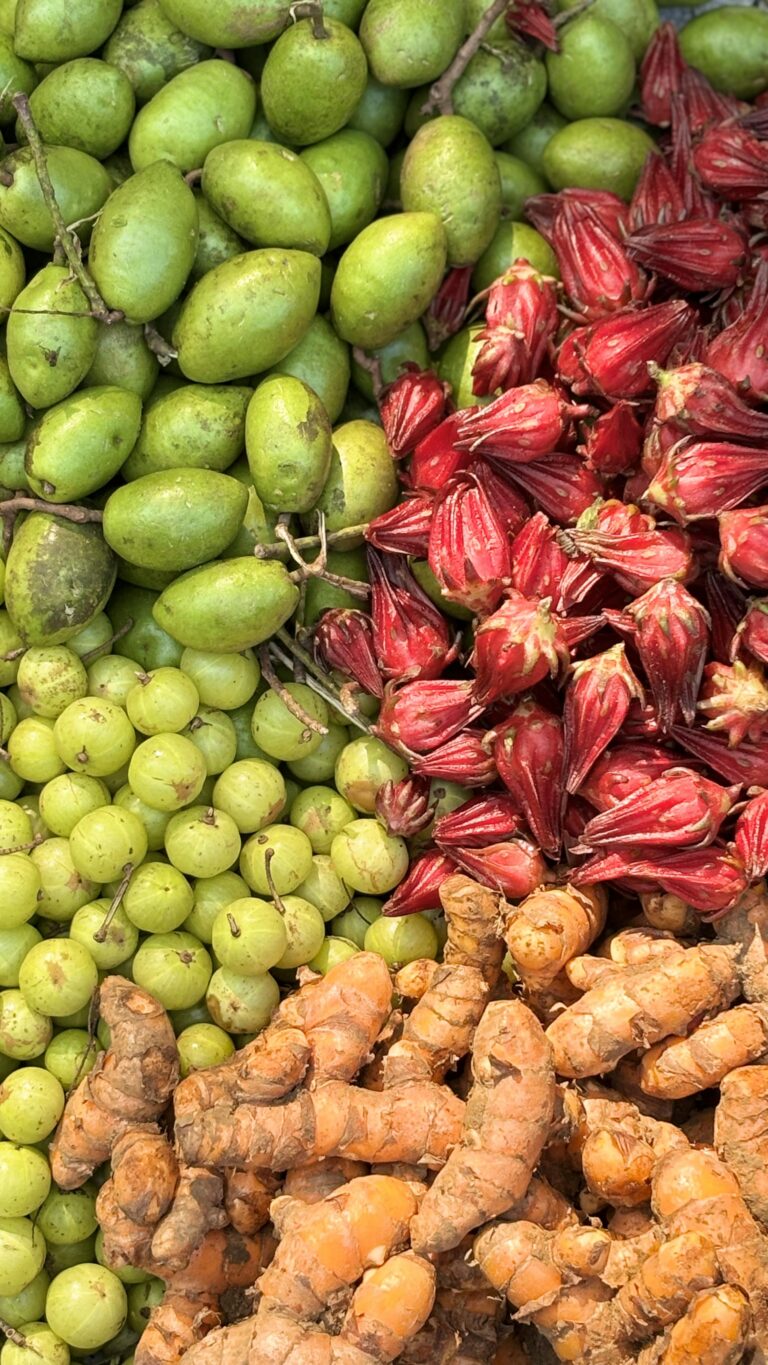
Phyto-Medicines (also called Herbal Medicines, Botanical Medicines & Medical Herbalism) is a type of Alternative & Complimentary Medicines (CAM) that uses Plants & Plant Extracts for the treatment of diseases. It is practiced all over the world. In Phyto-medicines, the active ingredient of the plant (Phytonutrient) is used for medicinal purposes. On the other hand, in Ayurveda the entire plant or the specific part of the plant (e.g. stem, root, leaves etc.) is used for medicinal purposes.
How it works
Plants contain several active natural compounds (called Phyto-nutrients). Phyto-nutrients are extracted from the different parts of the plant e.g. Leaves, Flowers, Berries, Fruits, Roots, Bark etc. and used for medicinal purposes. These Phyto-nutrients have several simultaneous therapeutic biochemical actions in the body which promotes healing.
When these Phyto-nutrients are used for medicinal purposes they are called Phyto-medicines.
History
Plants had been used for medicinal purposes long before recorded history.
- Earliest recorded use of Medicinal Plant has been mentioned in ‘Rigveda’. The Rigveda is an ancient Indian collection of Vedic Sanskrit hymns.
- Ayurveda – The ancient Indian system of medicines describes uses of plants. The origin of Ayurveda has been traced to 5000 BC. Certain Ayurvedic texts explain the uses of Plants in various diseases.
- Ancient Chinese & Egyptian Papyrus writings describe medicinal uses for plants.
- In early 19th century, scientists began to extract & modify the active ingredients from plants.
- Middle of the 19th century, 80% of all medicines was herbal.

Present Scenario
- The World Health Organisation (WHO) estimates that 80% of earth’s population today depends on Plants to treat common ailments.
- Approximately two-thirds of India’s rural people, who comprise 70 percent of the population, use Ayurveda for their primary health care needs.
- In Germany, about 600-700 Plant-based medicines are available & are prescribed by some 70% of German Physicians.
- More than one third of Americans & Europeans use herbs for health purposes, spending over 7.0 billion dollars annually.
- In the last 20 years in the USA, there is an increase in herbal medicines use due to
- Public dissatisfaction with the cost of prescription medicines.
- Interest in returning to Herbal or Organic Remedies.
Facts
- More than 95% of the population in least developing countries use herbs for health & other purposes.
- It’s being used by about 80% of the world population primarily in the developing countries for primary healthcare.
- More than 70% of India’s population is still using Plant-based medicines
- More than one-third of Americans & Europeans use herbs for health purposes, spending over 7 billion USD annually.
- More than 25% of Modern Pharmaceutical drugs have Botanical origins.
- It is estimated that in India, more than 6000 Plant species forming about 40% of the Plant diversity of the country are used in its codified & folk healthcare traditions.
Advantages
- Natural & Non-invasive Therapy
- Safe & Effective
- Economical
- Suitable for all age groups
- Adaptogenic
- Cultural acceptability
- Easily absorbed in the body & blood stream
- Preventive as well as Curative therapy
- Improves Immunity & detoxify the body
Forms of Phyto-medicines
1. Dry Extracts (Capsules or Tablets)
Capsules are made from dried, powdered herbs that are packed into tablets or gelatin capsules. This is a convenient way to carry herbs, and to take herbs that are unpleasant tasting or smelling.
2. Liquid extracts
Liquid extracts are stronger than herbal tinctures, are thicker than a liquid, and can be made with alcohol or glycerin. Various types of extracts are available such as solid extracts of Licorice and Hawthorne.
3. Phyto-medicated tinctures
A tincture is made by soaking a plant, or parts of a plant, in alcohol. Alcohol is important in the extraction of an herb’s medicinal ingredients, as it helps to stabilize and preserve them. Because these compounds are well-preserved, they have a long shelf life. Herbal constituents in tincture-form are more readily absorbed by the body and have a high degree of bio-availability.
4. Phyto-medicated teas
There are two methods of making herbal teas; by infusion or decoction.
Infusions:
Infusions are hot water extracts made from herbs with medicinal constituents in their flowers, leaves and stems such as chamomile, mint, green and black tea among others.
Decoction:
Decoction is boiling tougher parts of plants, such as roots or bark, for a longer period of time such as ginger or cinnamon tea.
5. Phyto-medicated Juices
Fresh juices of plants/ herbs are simply prepared by crushing the plant into juice. This is an excellent way of getting vitamins and minerals from the plant; but the juice must be taken within a short time after being prepared, since the vitamin content declines rapidly and fermentation sets in.
6. Phyto-medicated Poultices
Poultices are used externally to treat affected areas. They are generally prepared fresh for each use by crushing the medicinal parts of the plants to a pulpy mass. If dried herbs are used, they are generally mixed in a substance such as water or vegetable fat before it is applied to the skin. For example, a mustard poultice is a mixture of ground mustard seeds mixed into a paste with flour and water, put on a piece of wet cotton or muslin, and placed over the chest for chronic coughs, chest congestion, bronchitis or pneumonia. A compress is a poultice that uses a piece of cloth soaked in a decoction or an infusion instead of a pulpy mass.
7. Phyto-medicated Ointments
An ointment is a semi-solid preparation made to be applied to the skin. Depending on the purpose and its method of preparation, the texture can vary from very greasy to a thick paste. The simplest ointments use beeswax, aloe vera gel, olive oil or vegetable oil as a base.
8. Essential Oils
Essential oils are extractions of volatile liquid plant materials and other aromatic compounds from plants. Most people are familiar with essential oils such as lavender, for relaxation, and eucalyptus, for colds or coughs. Essential oils are used with caution, as this is one of the most concentrated forms of delivering a plant’s constituents. They are generally only used externally and diluted in water, ointments, baths or oils.
Scope of Phyto-medicines
The scope of Phyto-medicines is not just limited to treat diseases but it can effectively be used for following purposes with examples:
- Nutrition: Food & Nutrition e.g. Coriander, Garlic
- Maintenance of Health: e.g. Dandelion, Spirulina
- Treatment of Disease: e.g. Himalayan Yew, Holy Basil
Medicinal Uses
- Cancers – All types
- Kidney Failure
- Liver Diseases
- Heart Blockage
- Arthritis- All forms
- Diabetes
- Sexual Weakness
- Hypertension
- Digestive Disorders
- Gynae Problems
- Asthma & Bronchitis
- Depression & Anxiety
- Acne
- Skin Diseases
- Hair Problems
- Kidney & Gall Stones
- Thyroid Problems
- Knee Diseases
- Nerve Diseases
- Paralysis
- Parkinson’s Disease
- Obesity
- Dengue & other Fevers
- Low Platelets
- Migraine & Headache
- Piles
- Prostate Problems
Safety
Although Phyto-medicines are Natural & Safe but in some cases they may show some mild side effects due to following reasons
- They are unregulated
- If they contains additives & contaminants
- Some persons may be allergic to them
- Interaction with some conventional drugs
- If used at higher than recommended doses
- If taken without the supervision of a qualified practitioner
- If taken during pregnancy without the guidance of physician
Conventional Drugs from Plant source
More than 25% of modern pharmaceutical drugs have botanical origins. Following are the Conventional Pharmaceutical Drugs made from Plant sources:
- Aspirin
- Cocaine
- Quinidine
- Scopolamine
- Tubocurarine
- Codeine
- Ergotamine
- Vincristine
- Physostigmine
- Morphine
- Digoxin
- Lanoxin
- Pilocarpine
- Colchicine
- Ephedrine
- Reserpine
- Taxol
- Etoposide